
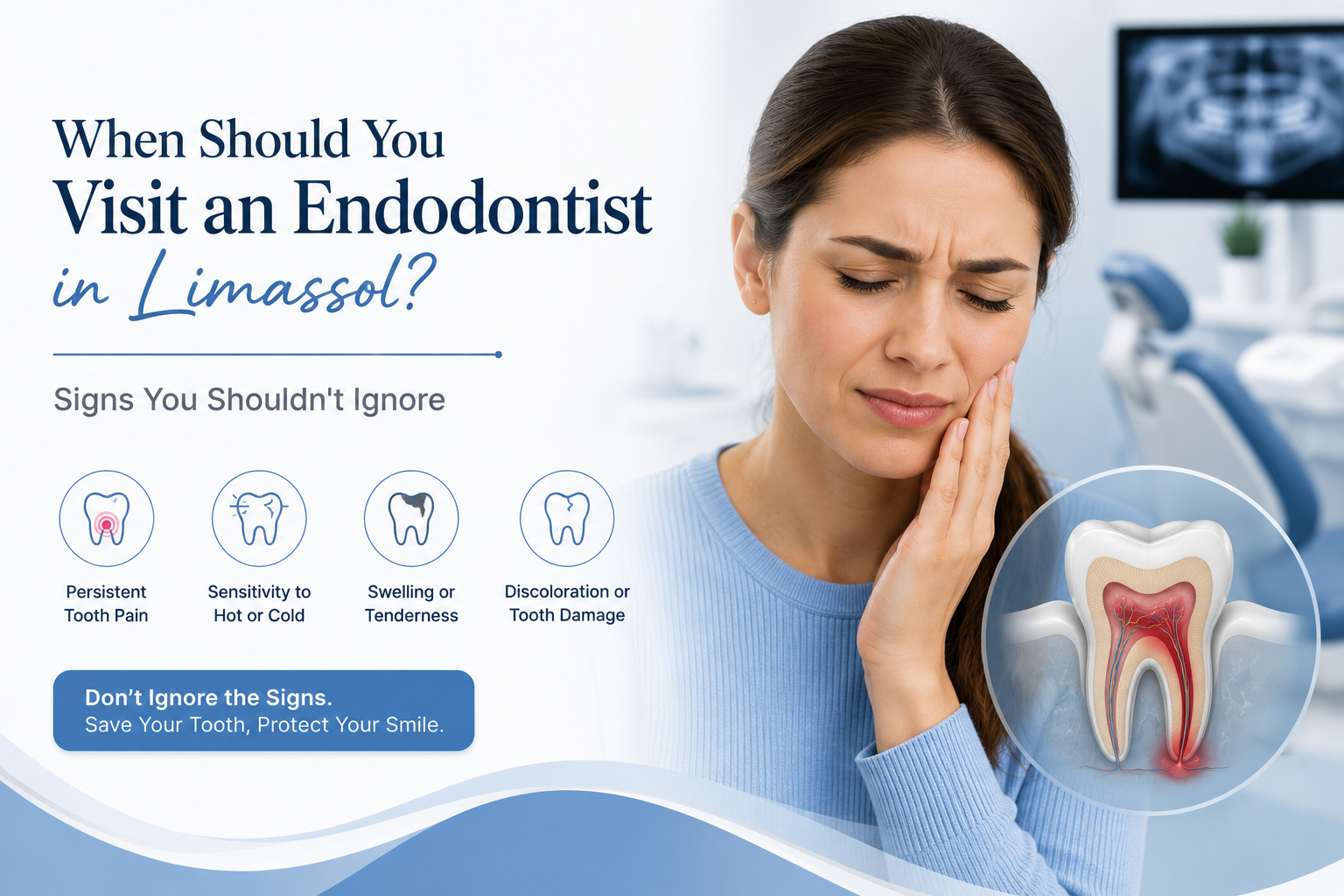
 When Should You Visit an Endodontist in Limassol? Signs You Shouldn't Ignore
Tooth pain can range from a minor inconvenience to a severe problem that affects daily life. While some dental discomfort may be temporary, persistent pain, sensitivity, or swelling can indicate a deeper issue involving the inner part of the tooth. In such cases, endodontic treatment may be necessary to preserve the tooth and prevent further complications.
An endodontist specializes in diagnosing and treating problems affecting the dental pulp, commonly known as the soft tissue and nerves inside the tooth. Endodontic care focuses on saving natural teeth whenever possible, helping patients maintain their oral health and avoid unnecessary tooth loss.
If you are considering visiting an endodontist in Limassol, understanding the warning signs and treatment options can help you seek care at the right time.
What Is Endodontics?
Endodontics is a branch of dentistry that focuses on the diagnosis and treatment of conditions affecting the inside of the tooth.
Each tooth contains a pulp chamber that houses:
- Nerves
- Blood vessels
- Connective tissue
When this tissue becomes inflamed or infected due to decay, trauma, cracks, or other factors, endodontic treatment may be required to eliminate infection and preserve the tooth.
The most commonly known endodontic procedure is root canal treatment.
Why Saving Natural Teeth Matters
Modern dentistry prioritizes preserving natural teeth whenever possible.
Keeping a natural tooth offers several benefits:
- Maintains normal chewing function
- Preserves natural bite alignment
- Supports jawbone health
- Prevents neighboring teeth from shifting
- Maintains smile aesthetics
Endodontic treatment often allows patients to keep their natural teeth for many years while avoiding more extensive restorative procedures.
Common Signs You May Need an Endodontist
Not all tooth pain requires endodontic treatment, but certain symptoms should not be ignored.
Persistent Tooth Pain
Ongoing pain that does not improve may indicate inflammation or infection within the tooth.
Pain may occur:
- While chewing
- When applying pressure
- Spontaneously without obvious cause
Persistent discomfort should always be evaluated by a dental professional.
Sensitivity to Hot or Cold
Temporary sensitivity is common, but prolonged sensitivity after exposure to hot or cold foods and beverages may suggest nerve involvement.
If discomfort lingers even after the stimulus is removed, further assessment may be necessary.
Swelling Around the Tooth or Gums
Swelling near a tooth can indicate infection affecting the surrounding tissues.
In some cases, patients may notice:
- Gum swelling
- Tenderness
- A small bump on the gums
- Facial swelling
Prompt treatment helps prevent the infection from spreading.
Tooth Discoloration
A tooth that becomes darker than surrounding teeth may indicate damage or changes within the pulp.
Although discoloration can occur for various reasons, internal tooth problems should be ruled out.
Pain Following Dental Trauma
Even if a tooth appears intact after an injury, the internal structures may have been affected.
Dental trauma can sometimes lead to delayed symptoms, making follow-up evaluation important.
What Causes Pulp Damage?
Several factors can affect the health of the dental pulp.
Common causes include:
- Deep tooth decay
- Cracked teeth
- Repeated dental procedures
- Trauma or injury
- Severe wear
- Untreated cavities
When bacteria reach the pulp, inflammation and infection can develop, increasing the likelihood of requiring endodontic treatment.
Understanding Root Canal Treatment
Root canal treatment is one of the most common endodontic procedures.
The treatment involves:
- Removing infected or damaged pulp tissue.
- Cleaning and disinfecting the root canals.
- Filling the canals to prevent reinfection.
- Restoring the tooth to protect its structure.
Contrary to common misconceptions, modern root canal treatment is designed to relieve pain rather than cause it.
Advances in dental technology and anesthesia have significantly improved patient comfort.
Benefits of Early Endodontic Treatment
Seeking treatment early can help prevent more serious complications.
Potential benefits include:
- Relief from pain and discomfort
- Preservation of natural teeth
- Prevention of infection spread
- Improved oral health
- Restoration of normal function
Delaying treatment may increase the risk of tooth loss or more extensive dental procedures.
How to Protect Your Teeth from Future Problems
While not all endodontic issues can be prevented, certain habits help reduce risk.
Patients should:
- Brush twice daily
- Floss regularly
- Attend routine dental check-ups
- Address cavities promptly
- Wear protective mouthguards during sports
- Avoid using teeth as tools
Preventive care remains one of the most effective ways to protect natural teeth.
Frequently Asked Questions
What does an endodontist do?
An endodontist specializes in diagnosing and treating conditions affecting the inside of the tooth, including infections and nerve-related problems.
Is root canal treatment painful?
Modern root canal treatment is generally comfortable and is designed to relieve pain caused by infection or inflammation.
How do I know if I need endodontic treatment?
Persistent tooth pain, prolonged sensitivity, swelling, discoloration, or dental trauma may indicate the need for further evaluation.
Can a root canal save a tooth?
Yes. Root canal treatment is intended to preserve natural teeth that might otherwise require extraction.
When should I see a dentist about tooth pain?
Any ongoing pain, swelling, or unusual symptoms should be assessed promptly to determine the underlying cause.
Protecting Your Natural Smile
Endodontic treatment plays an important role in preserving natural teeth and maintaining long-term oral health. Recognizing early warning signs and seeking professional care can often prevent more serious complications while improving comfort and function.
At Dr. Zenonos – The Dental Clinic, patients receive thorough assessments and personalized treatment recommendations to address dental concerns effectively. Whether experiencing tooth pain, sensitivity, or signs of infection, timely care can help protect your smile and support lasting oral health.