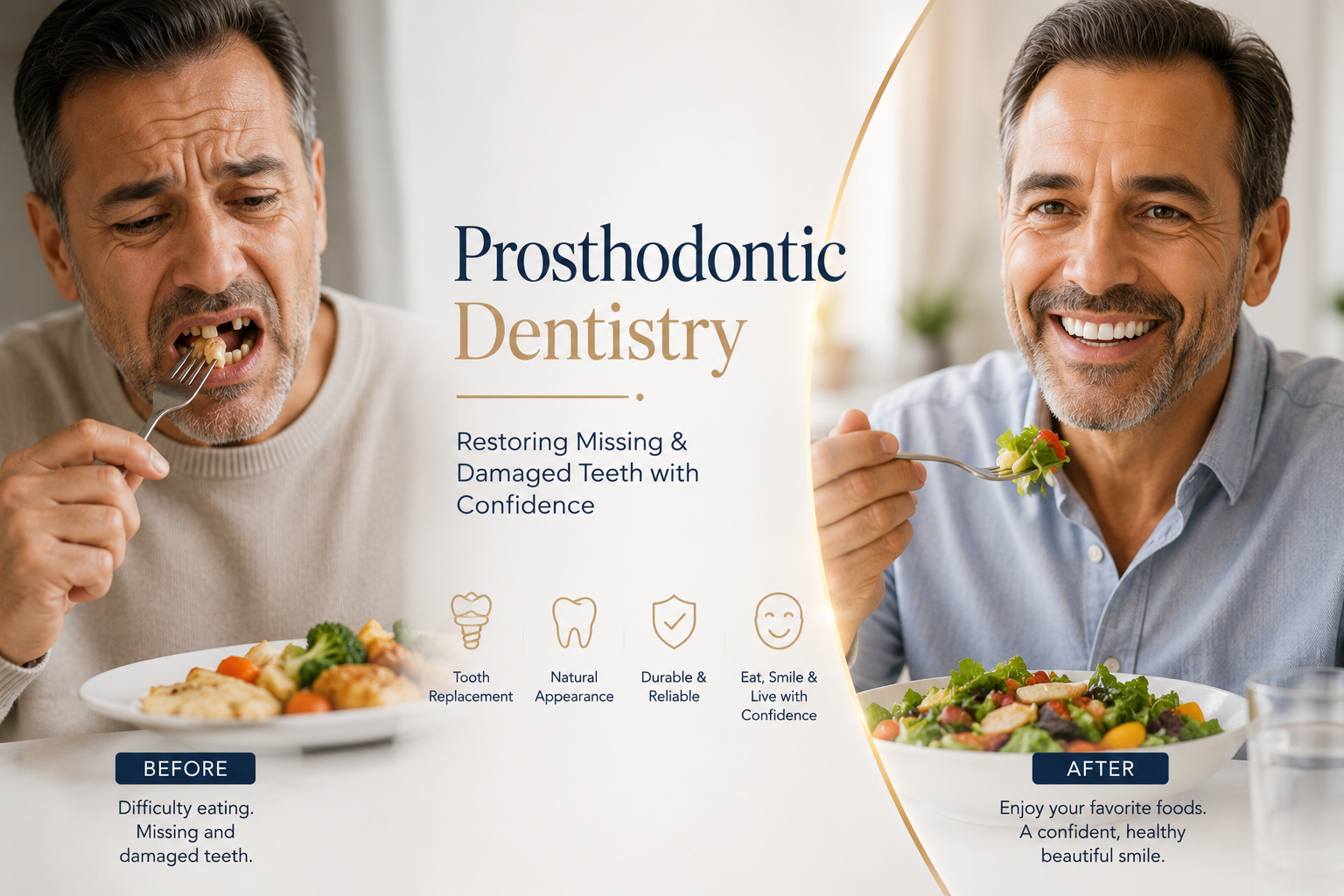
 Prosthodontic Dentistry: Restoring Missing and Damaged Teeth with Confidence
A healthy smile depends on more than just maintaining clean teeth and healthy gums. When teeth become damaged, worn, weakened, or missing, everyday activities such as eating, speaking, and smiling can become more challenging. This is where prosthodontic dentistry plays an important role.
Prosthodontics is a specialized area of dentistry focused on restoring and replacing teeth to improve both function and appearance. Through advanced restorative treatments, prosthodontic care helps patients regain confidence in their smiles while supporting long-term oral health.
Whether addressing a single damaged tooth or multiple missing teeth, prosthodontic treatment aims to create durable, natural-looking results that enhance quality of life.
What Is Prosthodontic Dentistry?
Prosthodontic dentistry focuses on the restoration and replacement of teeth affected by damage, wear, decay, or tooth loss.
The primary goals of prosthodontic treatment are to:
- Restore oral function
- Improve smile aesthetics
- Preserve remaining tooth structure
- Support long-term dental health
- Enhance comfort and confidence
Prosthodontic care often combines restorative principles with aesthetic considerations to achieve results that look and feel natural.
Why Is Tooth Restoration Important?
Missing or damaged teeth can affect more than just appearance. Over time, untreated dental issues may contribute to changes in bite function, jaw alignment, and overall oral health.
Some potential consequences include:
- Difficulty chewing
- Speech challenges
- Increased tooth wear
- Shifting of surrounding teeth
- Changes in facial appearance
- Reduced self-confidence
Restorative treatment helps address these concerns while preserving the health of remaining teeth and supporting structures.
Common Prosthodontic Treatments
Modern prosthodontic dentistry offers a variety of solutions depending on the patient's specific needs and treatment goals.
Dental Crowns
Crowns are custom-made restorations that cover and protect weakened or damaged teeth.
They are commonly recommended for:
- Fractured teeth
- Large fillings
- Root canal-treated teeth
- Severely worn teeth
Crowns restore strength, shape, and appearance while helping protect the remaining tooth structure.
Dental Bridges
Bridges are used to replace one or more missing teeth by anchoring artificial teeth to neighboring teeth or dental implants.
They can help restore:
- Smile appearance
- Chewing function
- Tooth stability
Dentures
Dentures provide a solution for patients who have lost multiple teeth.
Depending on individual needs, dentures may be:
- Partial dentures
- Complete dentures
Modern dentures are designed to improve comfort, appearance, and functionality.
Implant-Supported Restorations
Dental implants can serve as stable foundations for crowns, bridges, or dentures, helping replace missing teeth while preserving jawbone support.
Ready to Improve Your Smile?
Book a consultation with Dr. Zenonos and receive a personalized treatment plan tailored to your smile goals.
Book Your Consultation →Who Can Benefit from Prosthodontic Care?
Prosthodontic treatment may be suitable for patients experiencing:
- Missing teeth
- Damaged teeth
- Worn teeth
- Broken restorations
- Bite problems
- Significant tooth loss
A comprehensive evaluation helps determine the most appropriate restorative approach based on oral health, goals, and lifestyle factors.
Every treatment plan is customized to address the patient's unique needs.
The Aesthetic Side of Prosthodontics
While function is a major focus, prosthodontic dentistry also places significant emphasis on aesthetics.
Modern restorative materials are designed to:
- Match natural tooth color
- Mimic tooth translucency
- Blend with surrounding teeth
- Support facial appearance
The result is a restoration that not only performs well but also contributes to a natural-looking smile.
This balance between function and aesthetics is one of the defining characteristics of prosthodontic treatment.
Long-Term Benefits of Restoring Missing Teeth
Replacing missing or damaged teeth can provide several long-term advantages.
Potential benefits include:
Improved Chewing Efficiency
Restoring missing teeth helps improve the ability to chew a wide variety of foods comfortably.
Better Speech
Some dental restorations can help improve pronunciation and speech clarity.
Enhanced Smile Confidence
Many patients feel more comfortable smiling and socializing after restorative treatment.
Protection of Remaining Teeth
Replacing missing teeth may help reduce excessive pressure on surrounding teeth.
Support for Facial Structure
Tooth replacement can help maintain facial support and prevent changes associated with tooth loss.
Maintaining Prosthodontic Restorations
Proper maintenance is essential for preserving the longevity of restorations and supporting overall oral health.
Patients should:
- Brush twice daily
- Floss regularly
- Attend routine dental examinations
- Follow specific care instructions
- Avoid damaging habits such as chewing hard objects
Regular professional care helps ensure restorations continue to function effectively for many years.
Restoring Confidence Through Prosthodontic Care
Prosthodontic dentistry provides effective solutions for patients seeking to restore damaged, worn, or missing teeth. By combining functional restoration with aesthetic excellence, modern prosthodontic treatments can improve comfort, confidence, and quality of life.
At Dr. Zenonos – The Dental Clinic, prosthodontic treatment plans are tailored to each patient's individual needs, helping restore healthy smiles and support long-term oral wellness. Whether replacing a missing tooth or rebuilding a more complex smile, personalized restorative care can make a lasting difference.
Ready to Improve Your Smile?
Book a consultation with Dr. Zenonos and receive a personalized treatment plan tailored to your smile goals.
Book Your Consultation →Frequently Asked Questions
What is prosthodontic dentistry?
Prosthodontic dentistry focuses on restoring and replacing damaged or missing teeth to improve function, appearance, and oral health.
What treatments are included in prosthodontics?
Common treatments include crowns, bridges, dentures, implant-supported restorations, and other restorative procedures.
Why should missing teeth be replaced?
Replacing missing teeth can improve chewing, speech, smile aesthetics, and long-term oral health.
Are prosthodontic restorations natural-looking?
Yes. Modern materials are designed to closely resemble natural teeth in appearance and function.
How long do dental restorations last?
The lifespan of restorations varies depending on the treatment type, oral hygiene habits, and regular dental care.