
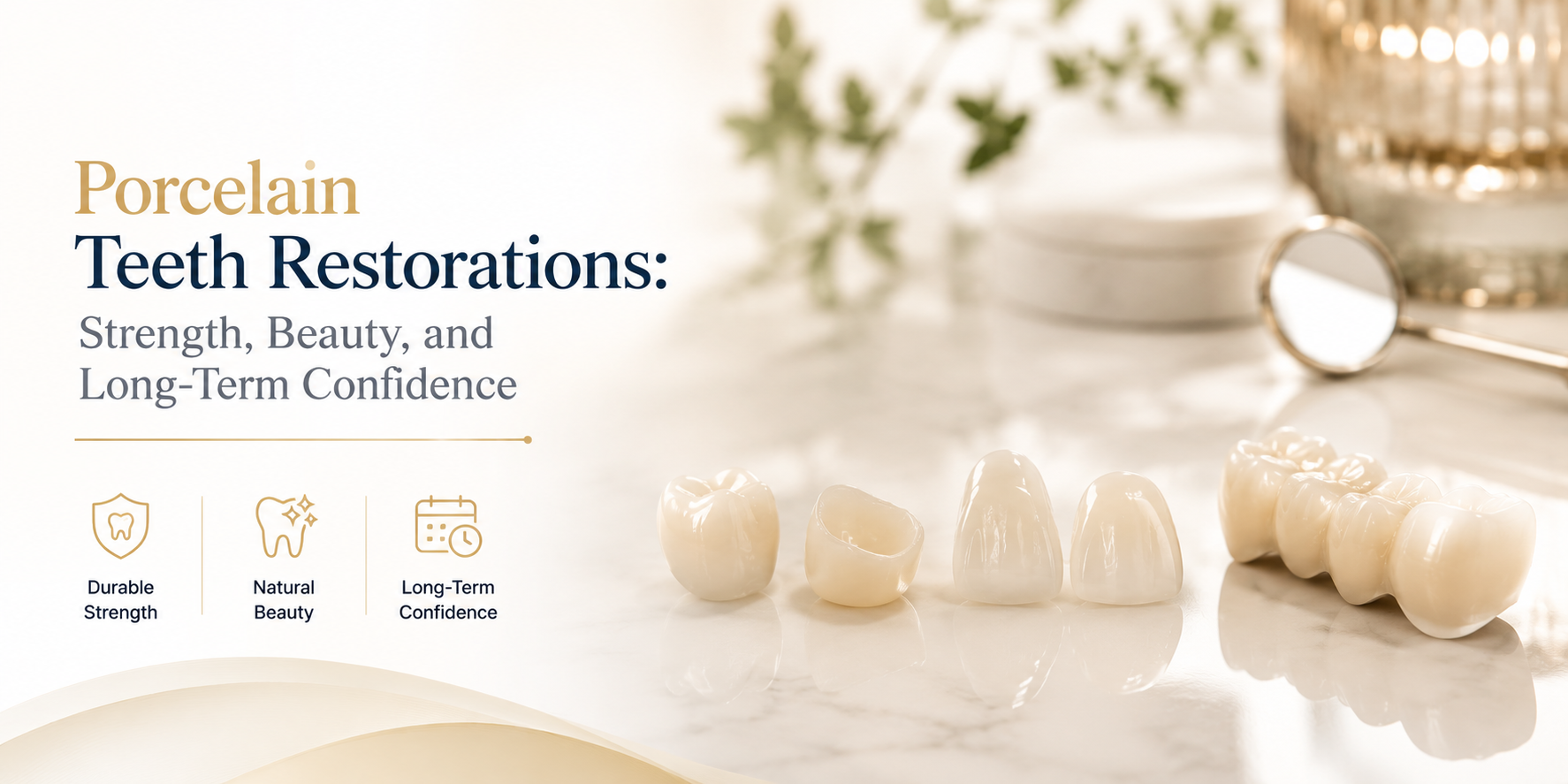
A healthy smile is about more than just appearance it also plays an important role in everyday functions such as speaking, eating, and maintaining confidence. When teeth become damaged, discolored, worn, or weakened, porcelain restorations can provide a durable and aesthetically pleasing solution.
Porcelain teeth restorations are widely used in modern dentistry because they closely resemble natural tooth enamel while offering excellent strength and longevity. Whether used for cosmetic improvements or restorative purposes, porcelain treatments can help patients achieve a healthier and more balanced smile.
For individuals exploring smile enhancement options, understanding the benefits and applications of porcelain restorations can help determine whether they are the right choice.
What Are Porcelain Teeth Restorations?
Porcelain teeth restorations refer to dental treatments that use high-quality ceramic materials to repair, strengthen, or improve the appearance of teeth. Porcelain is highly valued because of its natural translucency, allowing it to mimic the look of real teeth.
These restorations can be used to address a variety of dental concerns while maintaining a realistic and attractive appearance.
Common porcelain restorations include:
- Porcelain veneers
- Porcelain crowns
- Porcelain bridges
- Ceramic inlays and onlays
Each treatment serves a different purpose depending on the patient's oral health needs and cosmetic goals.
Why Is Porcelain So Popular in Dentistry?
Porcelain has become one of the most trusted materials in modern dentistry because it offers both functional and aesthetic advantages.
Some of the key reasons patients choose porcelain restorations include:
Natural Appearance
Porcelain reflects light in a way that closely resembles natural tooth enamel, making restorations blend seamlessly with surrounding teeth.
Durability
Modern porcelain materials are designed to withstand everyday chewing forces and can provide long-lasting results with proper care.
Stain Resistance
Porcelain is generally more resistant to staining than natural teeth, helping maintain a bright and attractive smile over time.
Biocompatibility
Porcelain is well-tolerated by oral tissues and is commonly used in restorative and cosmetic dentistry.
Porcelain Veneers for Smile Enhancement
One of the most popular cosmetic uses of porcelain is in the creation of dental veneers.
Porcelain veneers are thin custom-made shells that are bonded to the front surfaces of teeth. They are often used to improve:
- Tooth discoloration
- Minor gaps
- Uneven tooth shape
- Chipped teeth
- Slight misalignment
Because veneers can address multiple concerns simultaneously, they are frequently included in smile makeover treatments.
Porcelain Crowns for Damaged Teeth
When a tooth has been weakened due to decay, fracture, or previous dental work, a porcelain crown may be recommended.
A crown covers the visible portion of the tooth, restoring:
- Strength
- Shape
- Function
- Appearance
Porcelain crowns are particularly popular for visible teeth because they provide excellent aesthetics while protecting the underlying tooth structure.
Book Your Appointment
Who Can Benefit from Porcelain Restorations?
Porcelain restorations may be suitable for individuals experiencing:
- Worn teeth
- Chipped teeth
- Cracked teeth
- Severe discoloration
- Large fillings
- Cosmetic concerns affecting the smile
Before treatment, a comprehensive dental examination helps determine whether porcelain restorations are the most appropriate solution.
Healthy gums and good oral hygiene are important factors for long-term success.
How Long Do Porcelain Restorations Last?
The longevity of porcelain restorations depends on several factors, including oral hygiene habits, lifestyle choices, and the type of restoration.
With proper care, porcelain veneers and crowns can often last many years before requiring replacement.
Patients can help maximize durability by:
- Maintaining excellent oral hygiene
- Attending regular dental check-ups
- Avoiding chewing hard objects
- Wearing a night guard if recommended
- Following professional care instructions
Regular monitoring allows any potential issues to be identified and addressed early.
Caring for Porcelain Teeth
Looking after porcelain restorations is similar to caring for natural teeth.
Daily care should include:
- Brushing twice a day
- Flossing regularly
- Using non-abrasive dental products
- Visiting the dentist for routine examinations
- Limiting habits that may damage teeth
Consistent maintenance helps preserve both appearance and function for years to come.
Achieving a Stronger and More Beautiful Smile
Porcelain teeth restorations offer an effective way to improve both the appearance and function of damaged, worn, or discolored teeth. Their combination of durability, stain resistance, and natural aesthetics makes them one of the most popular choices in modern dentistry.
At Dr. Zenonos – The Dental Clinic, porcelain restorations are carefully planned to complement each patient's smile while supporting long-term oral health. Whether you're considering veneers, crowns, or other ceramic restorations, understanding the benefits of porcelain can help you make an informed decision about your dental care.
Frequently Asked Questions
What are porcelain teeth restorations?
Porcelain restorations are dental treatments that use ceramic materials to repair, restore, or improve the appearance of teeth.
Are porcelain teeth natural-looking?
Yes. Porcelain closely mimics natural tooth enamel and is widely used because of its realistic appearance.
What is the difference between porcelain veneers and crowns?
Veneers cover the front surface of a tooth, while crowns cover the entire visible portion of the tooth.
Can porcelain restorations stain?
Porcelain is highly resistant to staining, making it a popular option for long-term smile enhancement.
How long do porcelain restorations last?
With proper care and regular dental visits, porcelain restorations can provide durable and long-lasting results.