
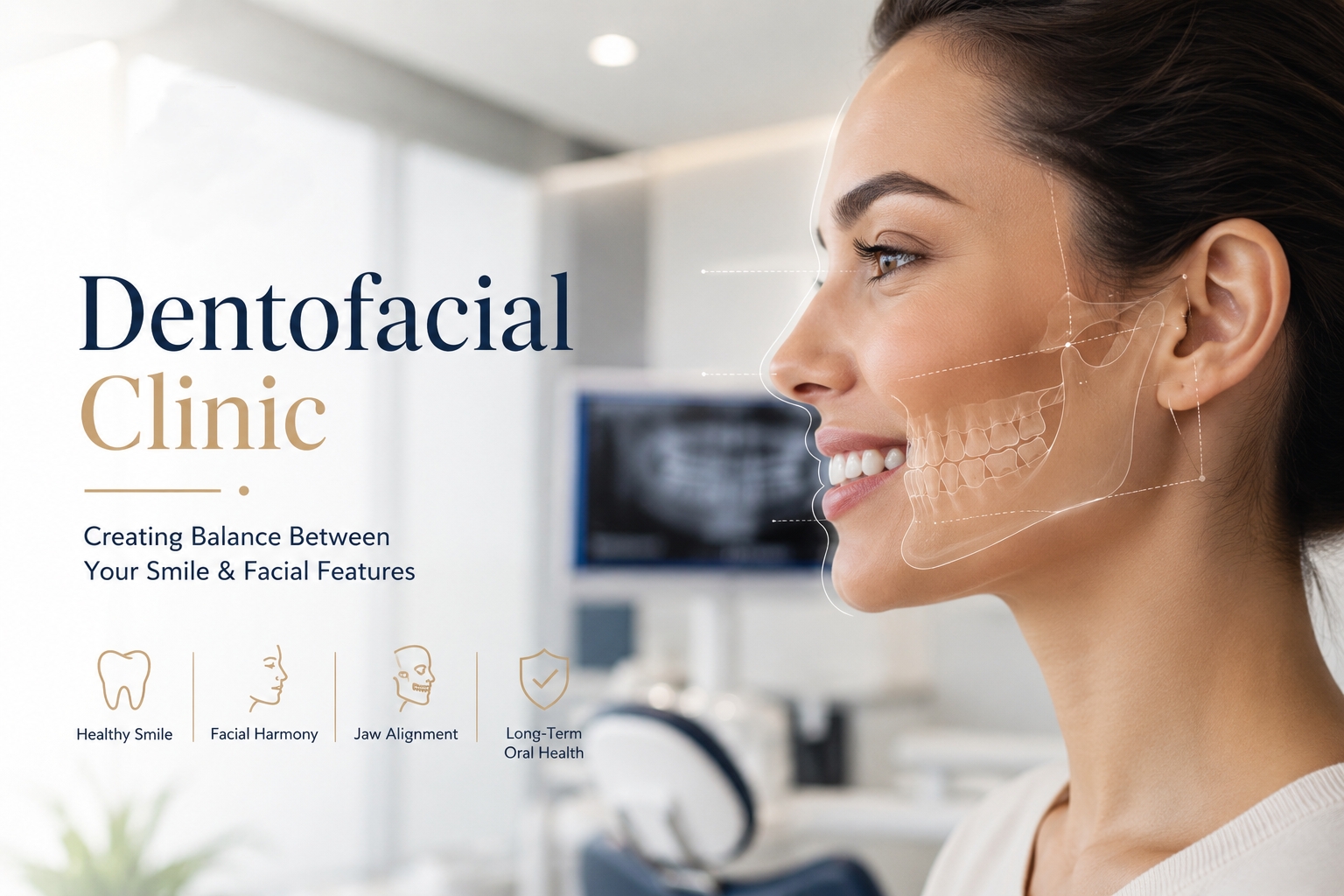
What Is a Dentofacial Clinic and How Can It Improve Oral and Facial Harmony?
A healthy smile is about more than just teeth. The relationship between the teeth, jaws, facial muscles, and overall facial structure plays a significant role in both appearance and function. This is where dentofacial care becomes important.
A dentofacial clinic focuses on the connection between dental health and facial harmony. By evaluating how the teeth, jaws, and facial features work together, dental professionals can develop treatment plans that improve not only oral function but also overall facial balance and aesthetics.
Many patients are unaware that concerns such as bite problems, jaw alignment issues, facial asymmetry, and smile irregularities may be related to underlying dentofacial factors. Understanding the role of a dentofacial clinic can help individuals make informed decisions about their oral and facial health.
What Does Dentofacial Mean?
The term "dentofacial" refers to the relationship between the teeth ("dento") and the face ("facial"). Dentofacial care examines how these structures interact and influence one another.
Rather than focusing solely on individual teeth, dentofacial assessment considers:
- Tooth alignment
- Jaw position
- Facial proportions
- Bite function
- Smile aesthetics
- Overall facial balance
This broader perspective allows dentists to identify factors that may affect both appearance and oral function.
What Services Can a Dentofacial Clinic Provide?
A dentofacial clinic offers a variety of treatments designed to improve the relationship between the teeth, jaws, and facial structures. The focus is not only on creating an attractive smile but also on improving oral function, facial balance, and long-term dental health.
Depending on the patient's needs, services may include:
Orthodontic Assessment: An evaluation of the teeth and jaws to identify alignment issues such as crowding, spacing, and bite irregularities. Early assessment can help determine the most suitable treatment plan.
Smile Design Planning: A personalized approach to enhancing the appearance of the smile by considering tooth shape, size, color, gum contours, and facial proportions.
Bite Analysis: A detailed assessment of how the upper and lower teeth fit together. Correcting bite issues can improve chewing, speaking, and reduce unnecessary wear on the teeth.
Jaw Alignment Evaluation: An examination of jaw position and facial balance to identify concerns that may affect comfort, function, or overall facial harmony.
Cosmetic Dentistry: Treatments such as teeth whitening, veneers, and composite bonding that enhance the appearance of the smile while maintaining a natural look.
Restorative Dentistry: Solutions including crowns, bridges, dental implants, and tooth-colored restorations to repair damaged or missing teeth and restore proper function.
Functional Dental Treatment: Care focused on improving the way the teeth, jaws, and muscles work together, helping patients enjoy greater comfort and better oral function.
The goal of a dentofacial clinic is to create a balanced result that supports both oral health and facial aesthetics through a personalized treatment approach.</span
Ready to Improve Your Smile?
Book a consultation with Dr. Zenonos and receive a personalized treatment plan tailored to your smile goals.
Book Your Consultation →Why Is Facial Harmony Important?
Facial harmony refers to the balanced relationship between different facial features. The position of the teeth and jaws can influence facial appearance more than many people realize.
For example:
- Misaligned teeth may affect smile symmetry.
- Jaw positioning can influence facial proportions.
- Bite problems may contribute to uneven facial appearance.
- Missing teeth can alter facial support over time.
By addressing these concerns, dentofacial treatment can help improve both function and appearance.
The Connection Between Bite Function and Facial Health
A healthy bite allows the upper and lower teeth to come together properly during chewing and speaking.
When bite problems are present, patients may experience:
- Difficulty chewing
- Excessive tooth wear
- Jaw discomfort
- Facial muscle strain
- Uneven pressure on teeth
A dentofacial assessment helps identify how bite function may be affecting oral health and overall facial balance.
Correcting these issues can contribute to improved comfort and long-term dental stability.
Common Dentofacial Concerns
Many people assume that dentofacial concerns only affect appearance, but they can also impact everyday functions such as chewing, speaking, breathing, and maintaining proper oral health. These issues may develop naturally during growth, result from injury, or occur due to the position and alignment of the teeth and jaws. Early diagnosis and personalized treatment planning can help improve both function and facial balance.
Some of the most common dentofacial concerns include:
Misaligned Teeth
Crooked, crowded, or overlapping teeth can make it difficult to clean properly, increasing the risk of plaque buildup, tooth decay, and gum disease. Misaligned teeth may also affect the appearance of your smile and bite function.
Bite Problems (Malocclusion)
An improper bite occurs when the upper and lower teeth do not fit together correctly. Common bite issues include:
- Overbite
- Underbite
- Crossbite
- Open bite
- Deep bite
These conditions may contribute to uneven tooth wear, jaw discomfort, difficulty chewing, and speech challenges if left untreated.
Jaw Misalignment
When the upper and lower jaws are not properly aligned, patients may experience difficulty biting, chewing, or maintaining balanced facial proportions. Jaw discrepancies can also influence facial symmetry and overall appearance.
Temporomandibular Joint (TMJ) Disorders
Problems involving the jaw joints and surrounding muscles can cause:
- Jaw pain or tenderness
- Clicking or popping sounds
- Limited jaw movement
- Headaches
- Facial discomfort
A comprehensive assessment can help determine whether jaw alignment or bite issues are contributing to these symptoms.
Facial Asymmetry
Slight facial asymmetry is common, but significant differences in jaw position or facial proportions may affect both aesthetics and oral function. In some cases, treatment may improve overall facial harmony while supporting proper bite alignment.
Missing or Worn Teeth
Tooth loss and severe tooth wear can alter the way the upper and lower jaws meet, affecting chewing efficiency, facial support, and smile aesthetics. Restorative treatments can help rebuild function while maintaining balanced facial structure.
Developmental Concerns in Children and Teenagers
As children grow, monitoring jaw development and tooth eruption is important for identifying potential orthodontic or dentofacial issues early. Timely intervention can often simplify future treatment and support healthy oral development.
Why Early Assessment Is Important
Many dentofacial concerns develop gradually and may not cause immediate discomfort. However, addressing problems early often allows for more conservative treatment and can help prevent complications later in life.
A comprehensive evaluation enables the dental team to assess the relationship between the teeth, jaws, facial muscles, and overall oral health before recommending the most appropriate treatment approach.
Dentofacial Treatment and Smile Design
Modern smile design is an important component of dentofacial care.
When planning treatment, dentists evaluate factors such as:
- Tooth shape
- Tooth color
- Smile line
- Lip position
- Facial proportions
- Gum appearance
The objective is to create a smile that complements the patient's unique facial characteristics while maintaining natural aesthetics.
This individualized approach helps ensure balanced and realistic results.
Benefits of Dentofacial Care
Dentofacial treatment is about much more than improving the appearance of your smile. By addressing the relationship between the teeth, jaws, and facial structures, it can enhance both oral function and overall facial harmony. A well-planned treatment approach considers how every part of the mouth works together, leading to long-term improvements in comfort, confidence, and dental health.
Some of the key benefits of dentofacial treatment include:
- Improved Smile Aesthetics: Correcting the alignment of the teeth and jaws can create a more balanced, symmetrical smile. Treatments may improve tooth positioning, smile proportions, and the relationship between the teeth and lips, resulting in a natural-looking appearance that complements your facial features.
- Better Bite Function: When the upper and lower teeth fit together correctly, everyday activities such as chewing, speaking, and biting become more comfortable and efficient. Proper bite alignment also helps distribute chewing forces evenly across the teeth, reducing unnecessary stress on individual teeth and the jaw.
- Enhanced Facial Balance: The position of the teeth and jaws has a significant influence on facial appearance. Dentofacial treatment can improve facial symmetry and support a more harmonious profile by addressing underlying alignment concerns rather than focusing only on the teeth.
- Greater Comfort During Chewing and Speaking: Jaw misalignment or bite irregularities can sometimes cause discomfort while eating or speaking. By improving the relationship between the jaws and teeth, dentofacial treatment can enhance daily comfort and make routine activities feel more natural.
- Reduced Tooth Wear: An uneven bite can place excessive pressure on certain teeth, leading to premature wear, chipping, or fractures over time. Correcting bite alignment helps protect the teeth by ensuring chewing forces are distributed more evenly.
- Support for Long-Term Oral Health: Well-aligned teeth are generally easier to clean, reducing the accumulation of plaque and lowering the risk of tooth decay and gum disease. Improved alignment also contributes to healthier supporting structures, helping preserve natural teeth for longer.
- Increased Self-Confidence: Many patients report feeling more confident after improving their smile and facial harmony. Feeling comfortable with your appearance can positively influence social interactions, professional settings, and overall quality of life.
- Personalized Treatment for Lasting Results: Every patient has unique dental and facial characteristics. Dentofacial treatment is carefully planned to address individual concerns while maintaining both function and aesthetics. This personalized approach helps achieve results that are natural, balanced, and designed to support long-term oral health.
Ready to Improve Your Smile?
Book a consultation with Dr. Zenonos and receive a personalized treatment plan tailored to your smile goals.
Book Your Consultation →A Comprehensive Approach to Oral and Facial Health
Unlike treatments that focus on a single issue, dentofacial care evaluates how the teeth, jaws, facial muscles, and bite work together as a complete system. By addressing both functional and aesthetic concerns, patients can enjoy improvements that extend beyond their smile supporting comfort, confidence, and overall oral health for years to come.
Frequently Asked Questions
Q1. What is a dentofacial clinic?
A dentofacial clinic specializes in evaluating and treating the relationship between the teeth, jaws, bite, and facial structures. The goal is to improve oral function, facial balance, and smile aesthetics through personalized dental care.
Q2. What treatments are available at a dentofacial clinic?
Depending on your needs, treatment may include orthodontic assessments, smile design, bite analysis, cosmetic dentistry, restorative dentistry, jaw alignment evaluations, and other procedures that support both function and aesthetics.
Q3. Can dentofacial treatment improve facial appearance?
Yes. By correcting tooth alignment, bite issues, and jaw positioning, dentofacial treatment can enhance facial symmetry, improve smile aesthetics, and create a more balanced overall appearance.
Q4. Is dentofacial treatment only for cosmetic purposes?
No. While improving the appearance of the smile is one benefit, dentofacial treatment also focuses on restoring proper bite function, improving comfort during chewing and speaking, and supporting long-term oral health.
Q5. Who should consider visiting a dentofacial clinic?
Anyone with crooked teeth, bite problems, jaw discomfort, facial asymmetry, worn or missing teeth, or concerns about their smile may benefit from a comprehensive dentofacial assessment. Early evaluation can help identify the most appropriate treatment options.